

Card spreads
An intention, a spread, a reading. A deep interpretation in Sibylla's voice.
Daily Draws
Quick, simple, open to you every day. Open a question with one card or three.
Deep Spreads
For layered questions. Large spreads that read a whole picture, not a single decision.
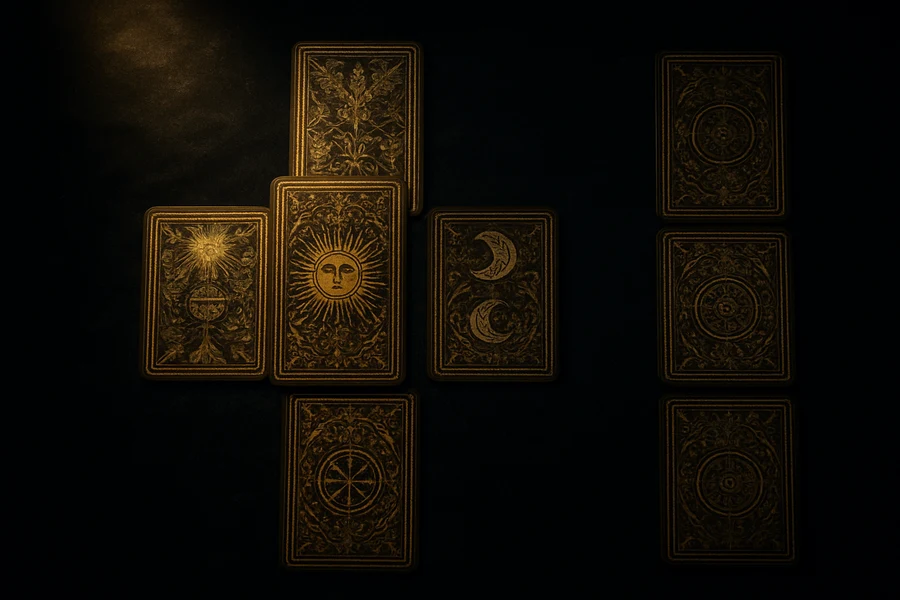
Celtic Cross, Ten Cards
Every layer of a complex situation. The present, the past, the future, the subconscious, the environment, hopes and fears, the outcome.
Open →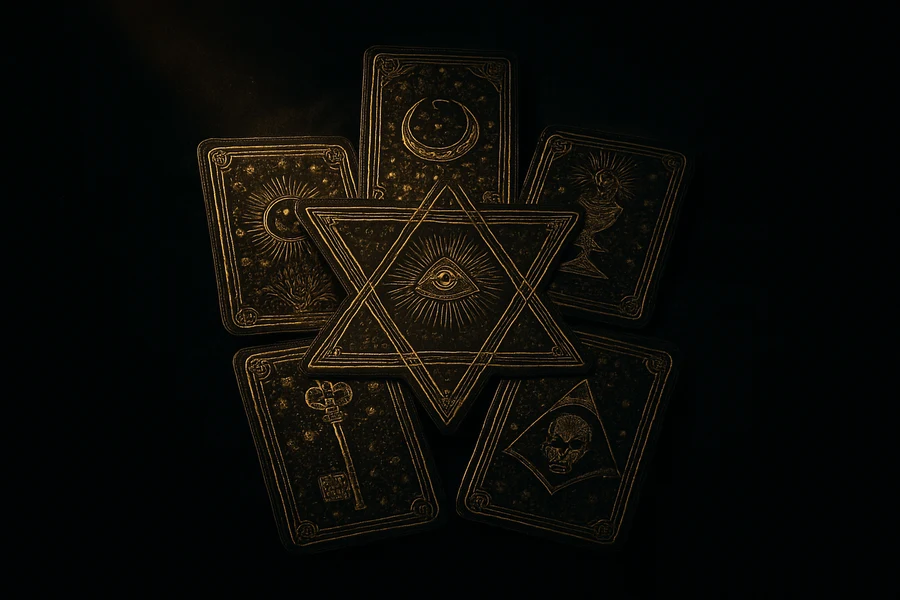
Star Spread
Six cards, a six-pointed star. A whole map for big questions: now, past, future, perception, environment, outcome.
Open →Year Ahead Tarot, 12 Months
The monthly path of the year ahead. 12 cards, 12 months. Open it at the start of the year, on your birthday, at the turn of a season.
Open →
Card Combinations
What two cards say side by side. The Star plus the Three of Swords, the Lovers plus the Devil, Death plus the Star.
Open →Love & Career Spreads
Spreads focused on a specific area. The dynamic of a relationship, a work decision, a choice between two paths.
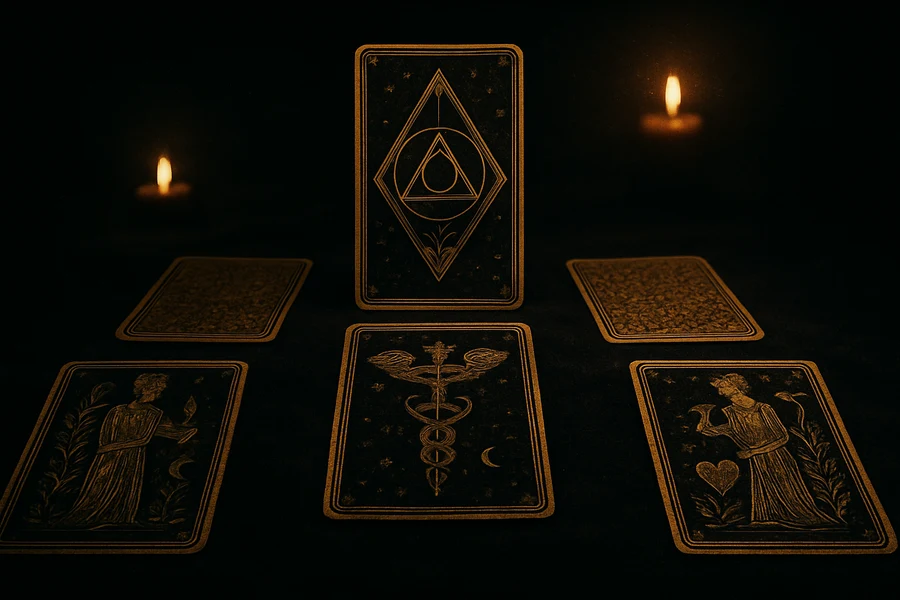
Love Spread (7 Cards)
You, the other person, the connection, the past, the present, the obstacle and the opening way ahead. For a current relationship, or for love that has not yet arrived.
Open →Lover's Triangle
A special seven card spread for relationship dynamics. You, them, the relationship, the past, the present, the obstacle, the outcome.
Open →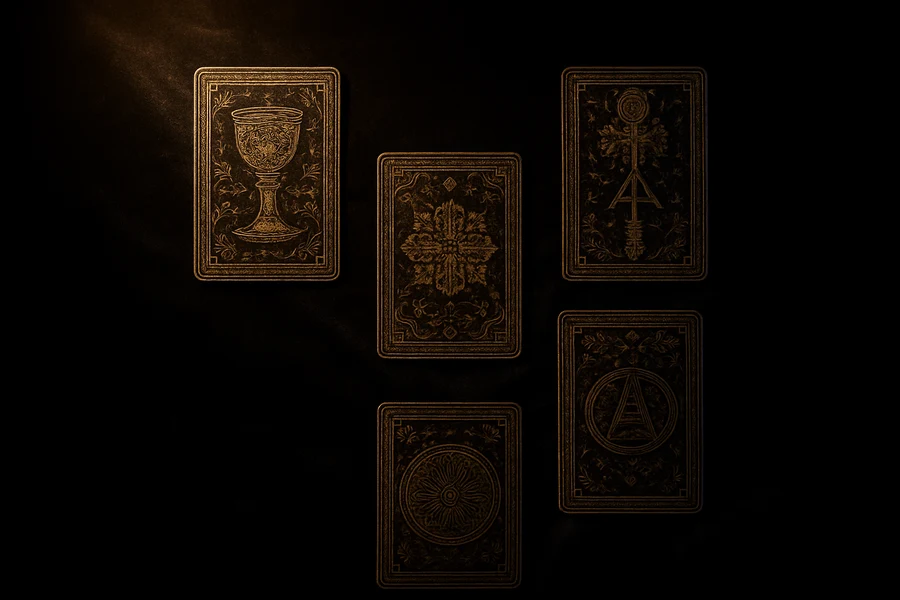
Career Spread (6 Cards)
Current situation, your strength, the challenge, the unseen, the advice, the direction. For a job change, a promotion, a career decision.
Open →Decision Spread
For when you are torn between two paths. Five cards: path A, path B, the inner reason, the outer reason, the right choice.
Open →Reading Journal
Every card you draw gathered in one journal. Recurring symbols, returning themes, the quiet bridge between then and now.
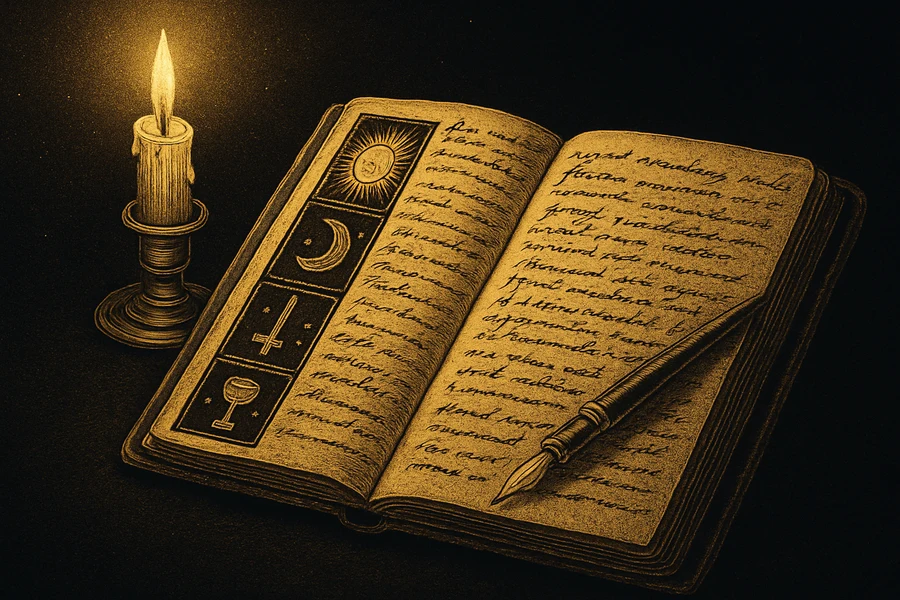
What is tarot?
Tarot is a way of practicing inner dialogue and self-reflection using a symbolic deck of 78 cards.
The deck holds two main groups. The Major Arcana, 22 cards, carries the great archetypal themes of life (the Fool, the Lovers, Death, the Star and so on). The Minor Arcana, 56 cards, describes everyday experience through four suits: Wands (will), Cups (emotion), Swords (mind), Pentacles (matter).
Its origins reach back to fifteenth century Italy. The Marseille tarot (16th-18th century) is the classical form, Rider-Waite (1909) the modern Western standard, Aleister Crowley's Thoth tarot (1944) the layer of esoteric depth. All three share the same 78 card structure, differing in symbolism and aesthetics.
At House of Zij tarot is not a tool of divination, it is a practice of reading symbols. As Carl Jung said, what tarot reflects is already inside you in that moment. A card does not tell you what will happen tomorrow, it holds up a mirror so you can see what is already inside you.
The spread is chosen according to the complexity of the question. One card for daily reflection, three cards for the past-present-future axis, the Celtic Cross for reading a whole life situation.
FAQ
Is tarot fortune telling?
No. Tarot is a practice of inner dialogue carried through 78 symbolic cards. It is one of the tools closest to Carl Jung's methods of symbol amplification and active imagination. A card does not tell you what will happen, it holds up a mirror so you can see what is already inside you.
What do upright and reversed meanings mean?
When a card is drawn it can land upright or upside down (reversed). The upright position speaks to the card's surface and outer meaning, the reversed position speaks to the inner, hidden side that has not yet been integrated. In our readings both positions are interpreted.
Which tarot deck is used?
House of Zij has its own 78 card deck, built on Rider-Waite iconography but adapted to the House of Zij aesthetic (onyx navy, champagne gold, sculptural 3D render). In the language of interpretation we also call on the Marseille and Thoth traditions from time to time.
Can I draw on the same question more than once?
Özge's discipline is simple: one reading for one question. Asking the same question again within a short span only blurs the answer. If the answer did not feel clear, it makes sense to reframe the question and draw again, but not to force the same symbol over and over.
How many cards is the Celtic Cross, and when is it used?
Ten cards. The present, the past, the future, the subconscious, the conscious, the near future, you, your environment, hopes and fears, the outcome. It is used when you want to look at every layer of a complex situation, when what is being asked is not a simple decision but a whole picture of a life.