

Which god is speaking with you
Explore the Pantheon
The gods of seven pantheons and the point where they meet your chart.
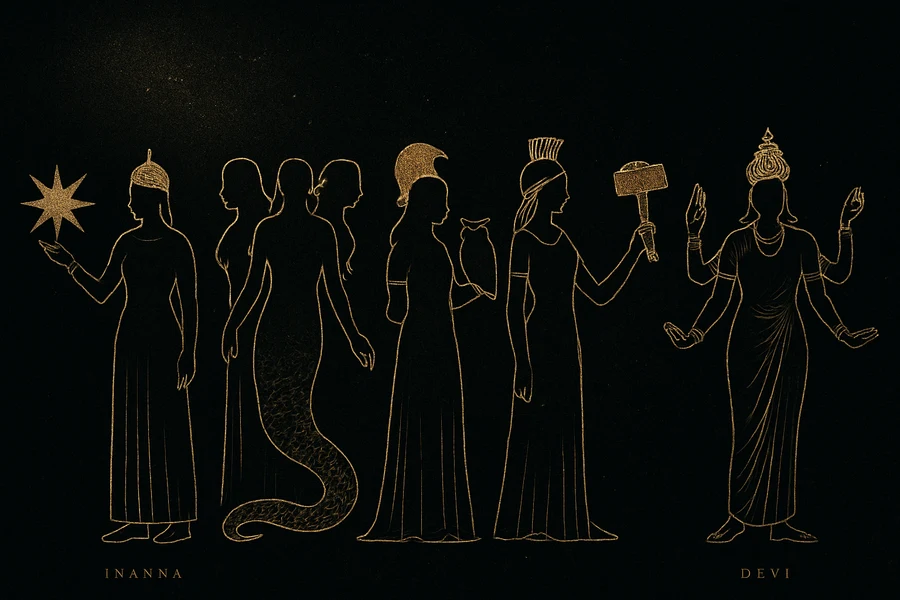
Atlas of Gods
The gods of seven pantheons, their symbols, their stories. Greco-Roman, Egyptian, Mesopotamian, Anatolian, Turkic-Tengri, Norse, Vedic.
Open the atlas →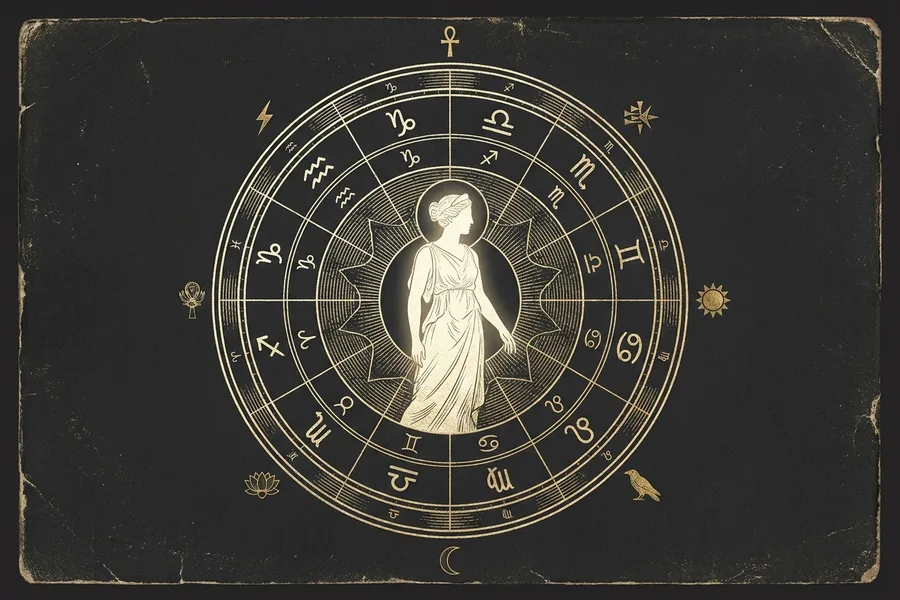
Mythic Identity
Which of the forty-two deities left its seal on your birth chart. Your Sun, Moon, Ascendant and dominant element, scored by real sky calculation.
Meet your chart's deity →Myth Readings
Which mythic figure walks with you, which god is speaking inside you right now.
Myth Match
Eight to ten questions. Which mythic figure are you close to, why, and what it is teaching you in your life.
Open with membership →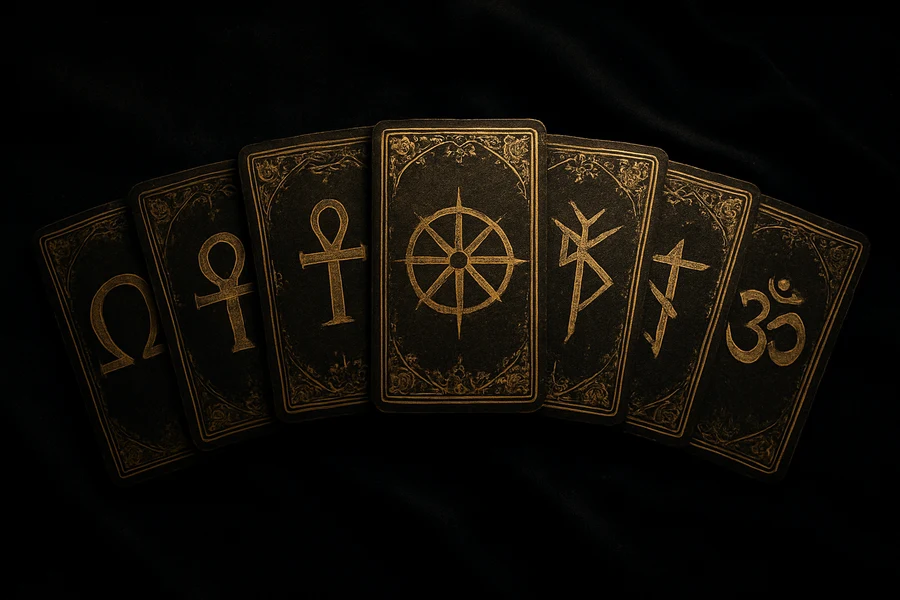
Myth Card Draw
Thirty six cards, figures from seven pantheons. Which god is speaking inside you right now, and what it is asking.
Open with membership →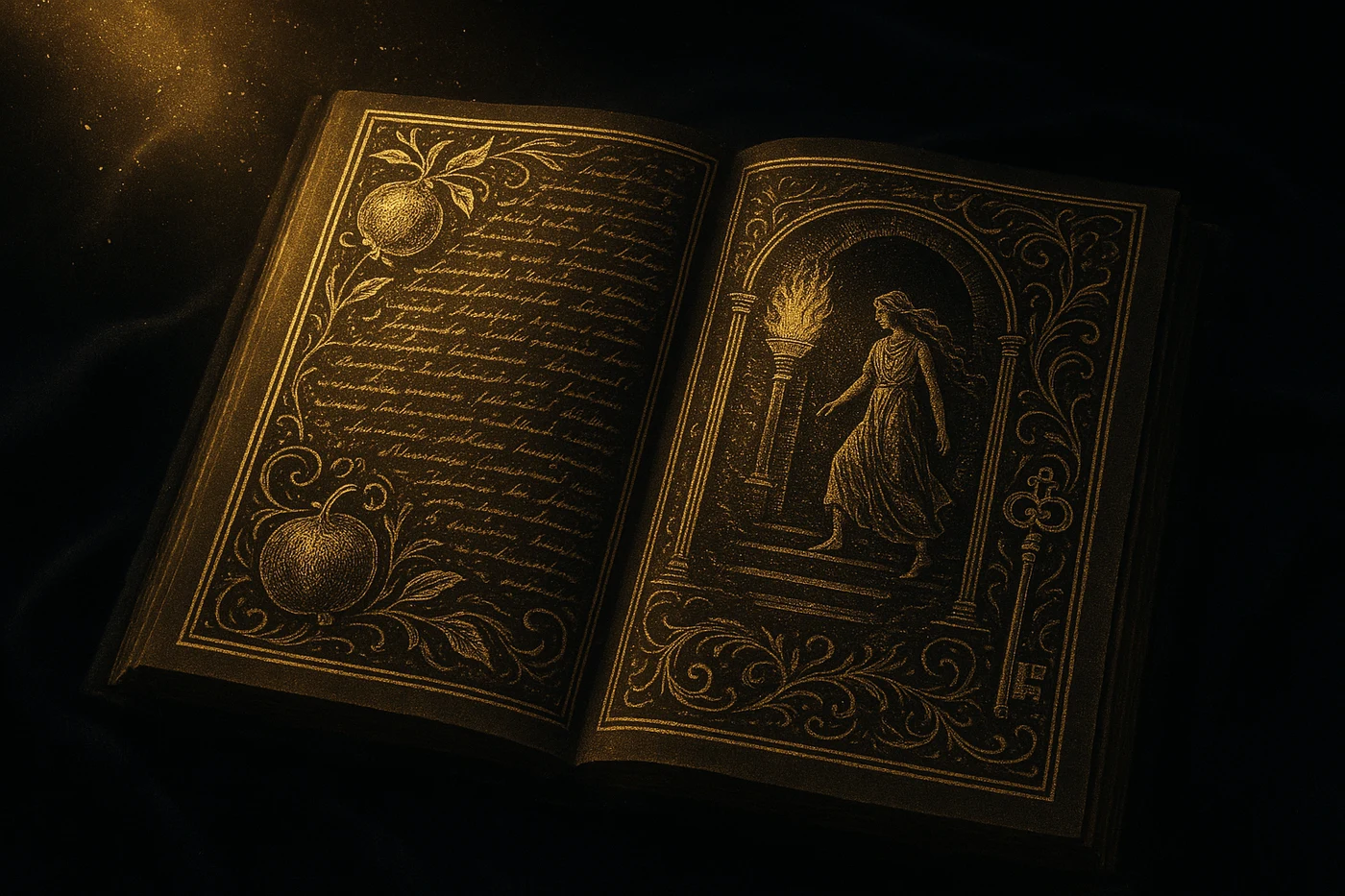
Story Library
Persephone's descent, Inanna's seven gates, Shahmaran's wisdom, Erlik's realm, Loki's game. Myths are not a pile of information, they are a culture's way of understanding the world. Atlas writes each story as a short piece of literature: none of the dryness of scholarship, none of the shallowness of a folk tale.
Deeply worked stories from seven pantheons. Each one is a door, and when you step inside you may hear something from your own chart too.
Read the stories →What is Mythos?
Mythos is the story room of House of Zij. Here we read together the gods of seven different cultures, their mythic figures and how they speak to your own life.
Myth is the understanding of the cosmos through narrative. A culture first tells the world as a story, and from that story comes astrology, then magic, then philosophy, then science. Every night we look at the stars, we are really looking into a myth. Mars is not just a red planet, it is the Roman god of war; in Greece Ares, in Mesopotamia Nergal, in Egypt Horus. The same redness speaks in seven different languages.
The roots of astrology, tarot and numerology are mythic. Pythagoras drew on Hermetic mysticism, Ptolemy gave the planets the names of the Olympian gods, and every major arcana in the Rider-Waite tarot rests on a mythic archetype. Without knowing the language of myth, it is hard to read these systems fully. Mythos builds that bridge.
The seven pantheons we have chosen: Greco-Roman (the order of Olympus), Egyptian (the underworld and the sun), Mesopotamian (the oldest written myths, Sumer and Babylon), Anatolian (Hittite, Phrygian, the legend of Shahmaran), Turkic-Tengri (the sky god tradition, Umay, Ulgen, Erlik), Norse (Odin, Yggdrasil, Ragnarok), and Vedic (the Hindu pantheon, Devi, Shiva, Kali). Seven windows, seven different worldviews.
Our approach is not that of an encyclopedia. Every article, every card, every atlas page connects to you: to the placements in your birth chart, to the card you draw, to the moment you are moving through. The gods are not far away, they are voices speaking inside you. Together we separate out which one you are hearing.
FAQ
What does Mythos mean?
It is a Greek word. In his Poetics, Aristotle defines mythos as the heart of drama, the skeleton of narrative. Logos is the language of reasoning, mythos is the language of story. The word mythos is the root of what we call "myth", the way a culture passes on its understanding of the world through story.
How is the Myth Card Draw different from tarot, coffee readings or oracle card draws?
Tarot is a symbolic language system of 78 cards, with roots reaching back to Renaissance Europe. Oracle cards are theme based, mostly a modern creation. The Myth Card is culturally far wider, thirty six cards with figures from seven different pantheons. The card you draw could be Inanna, it could be Tezcatlipoca, it could be Shahmaran. Each one speaks from its own mythic world.
Which pantheons are there?
Seven pantheons: Greco-Roman (Zeus, Aphrodite, Hekate), Egyptian (Isis, Osiris, Anubis), Mesopotamian (Inanna, Tiamat, Gilgamesh), Anatolian (Cybele, Shahmaran, Kumarbi), Turkic-Tengri (Ulgen, Erlik, Umay Ana), Norse (Odin, Freya, Loki), and Vedic (Devi, Shiva, Kali). Each pantheon is explored on its own page in the Atlas.
Who writes the stories?
Atlas, the editorial voice of House of Zij. Writing that rests on scholarly sources but stays fluid, warm and deep. None of the dryness of an encyclopedia, none of the shallowness of a folk tale. Stories like Persephone's descent, Inanna's seven gates and Shahmaran's wisdom are written as short pieces of literature.