
Loading...
The origin of the game
Sudoku, the quiet order of numbers
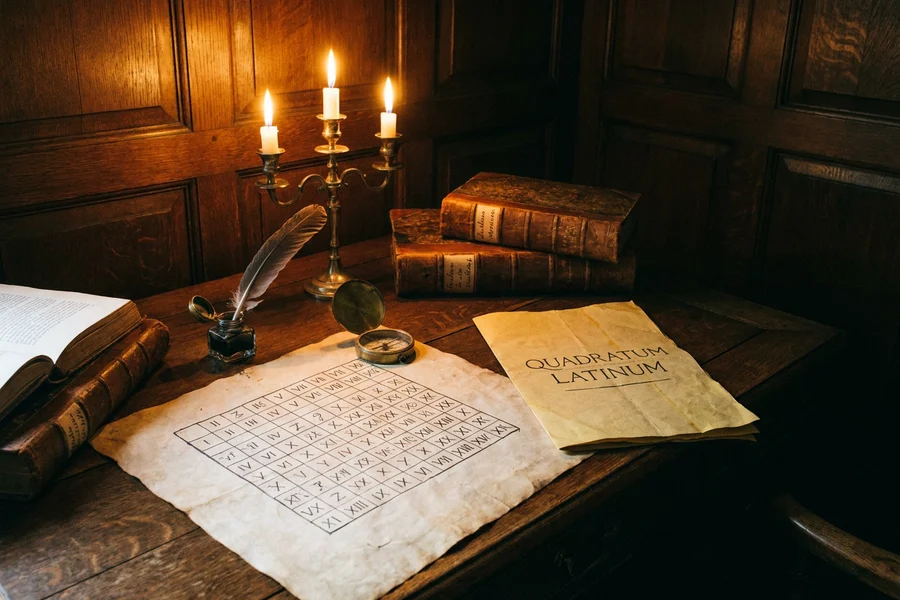
Sudoku's mathematical ancestor is the Latin square of the eighteenth century Swiss genius Leonhard Euler. Euler studied grids in which each symbol appears only once in every row and column. A pure symmetry, an art of balance made from numbers. In his day this was not a game but a mathematical problem, yet the seed of the addiction that would later sweep the world was already there inside it.
The form we know today is much younger. In 1979 an American architect, Howard Garns, published this grid as a puzzle in Dell magazines. Its true explosion came in 1980s Japan, where it earned the name we now use: sudoku, the number that stays single. At the start of the twenty first century it moved from newspaper pages to smartphones and became a quiet global passion.
At House of Zij the digits give way to planetary symbols. In every row, in every column, each sign must appear only once, just as in a well built chart every force finds its proper place. The calm satisfaction sudoku offers is not far from astrology: seeing that a grid which looks like chaos in fact rests on a flawless order. The sky is like that too, it seems scattered, yet everything is exactly where it belongs.
Seeing that a grid which looks like chaos in fact rests on a flawless order; the sky is like that too.