
Loading...
The origin of the game
Checkers, the game of stones that cross the threshold
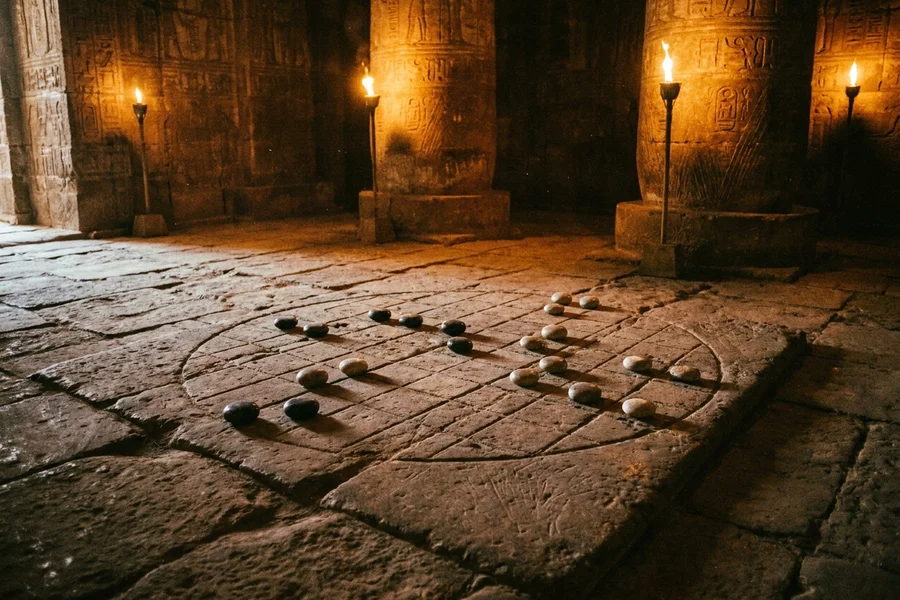
The ancestor of checkers is Alquerque, a game older than three thousand years. Boards scratched into the stones of the Kurna temple in ancient Egypt have survived, and it was played across the Middle East. The form we know today was born about a thousand years ago in southern France, when someone moved the Alquerque pieces onto the sixty four squares of the chessboard and ran them along the diagonals. They called it Jeu de Dames, the game of ladies, because a piece reaching the far edge was crowned and grew strong, just like the queen in chess.
In the sixteenth century the forced capture rule arrived: if you could jump an enemy piece, you had to. That small rule turned the game into an art of patience and traps, for now you could steer your opponent into a move he did not want. The game spread across Europe, becoming draughts in Britain and checkers in America. In our part of the world it took on its own straight-marching variant, Turkish draughts, and became a fixture of the coffee house table.
At House of Zij the stones become Sun and Moon, and the board becomes a threshold. You push a piece forward, you jump your opponent, and the one that reaches the far edge is crowned. Astrology thinks in thresholds too: the moment a planet crosses from one sign to the next, a degree where a stone is exalted, the endless balance of the Sun, light of day, and the Moon, light of night. Checkers lets you play the crossing of that threshold, advancing with patience and being crowned at the right moment.
Astrology thinks in thresholds too: a degree where a stone is exalted, the endless balance of Sun and Moon.