
Loading...
The origin of the game
The sequence, the game of remembering
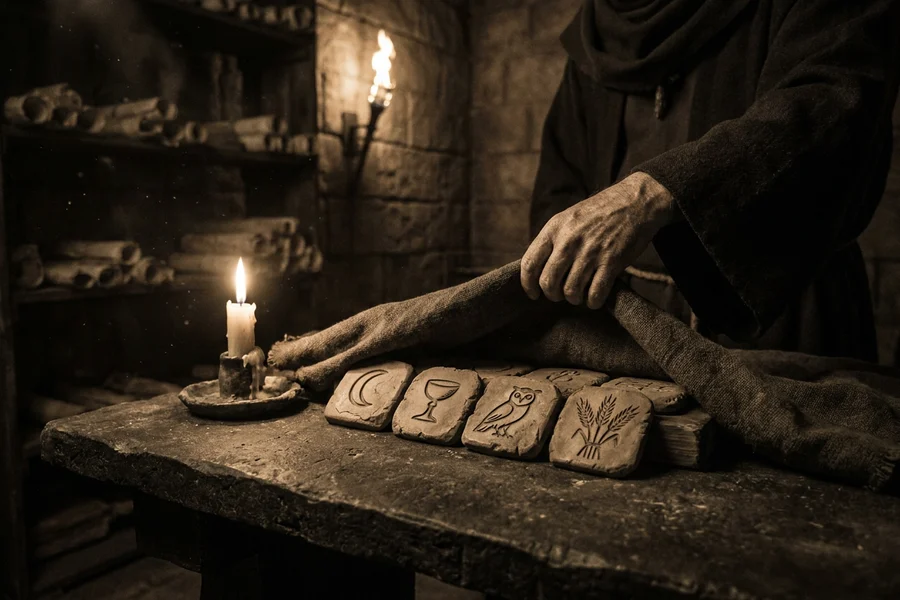
Watching a sequence and repeating it exactly is perhaps the purest form of game. A famous literary forebear of the idea is Kim's game: in Rudyard Kipling's 1901 novel Kim, objects laid on a tray are shown for a moment, then covered, and the player recounts what they remember. It is said even British spies trained their memories this way. Seeing is one thing, holding what you saw within is an altogether different gift.
In 1978 this old idea took on a brilliant new form: an electronic game called Simon appeared. Coloured lights flashed in a set order, each with a tone, and the player repeated the sequence. With every round the sequence grew by one step, until memory stumbled. That round, four coloured object became the emblem of a generation. Yet its essence was no different from Kipling's tray: look closely, hold calmly, give it back in the right order.
At House of Zij the lights give way to ancient symbols. A sequence is shown to you, fades away, and you rebuild it from memory. This game recalls a quiet habit of astrology: you first commit the patterns of the sky to memory, then carry them within you. The old astronomers did the same, holding the places of the constellations and the order of the planets in their minds. To remember is the oldest form of knowing.
Seeing is one thing, holding what you saw within is an altogether different gift.