
A House of Zij ritual
The Astragaloi
The Knucklebone Oracle
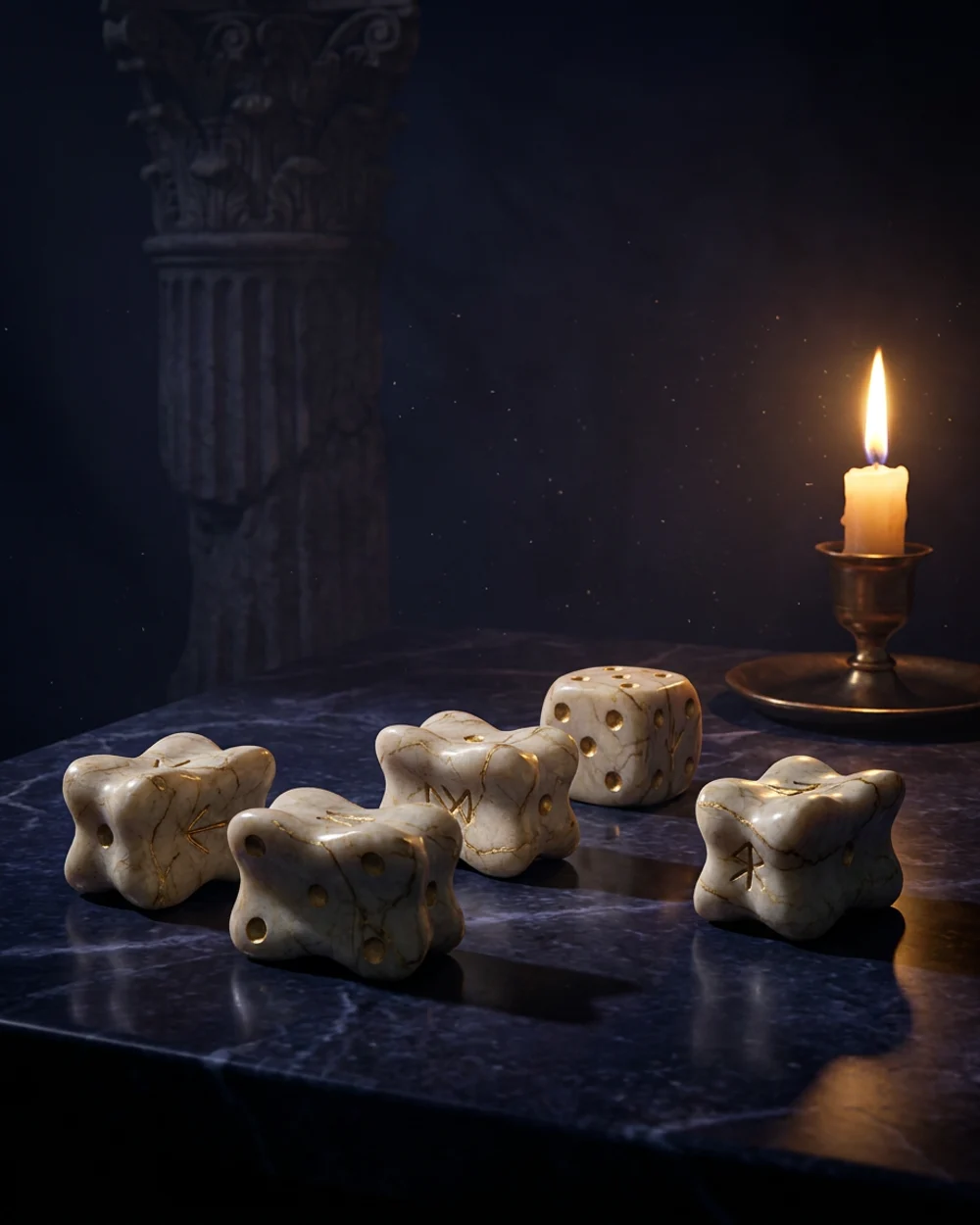
In ancient Anatolia, on the rock-cut steps of Termessos, a person carrying a question would let five small knucklebones fall to the ground. When the bones settled, the number they showed was never called chance. It was the answer to that moment. Today the hand is yours. You have a single cast, and it will tell you what this day is quietly saying to you.
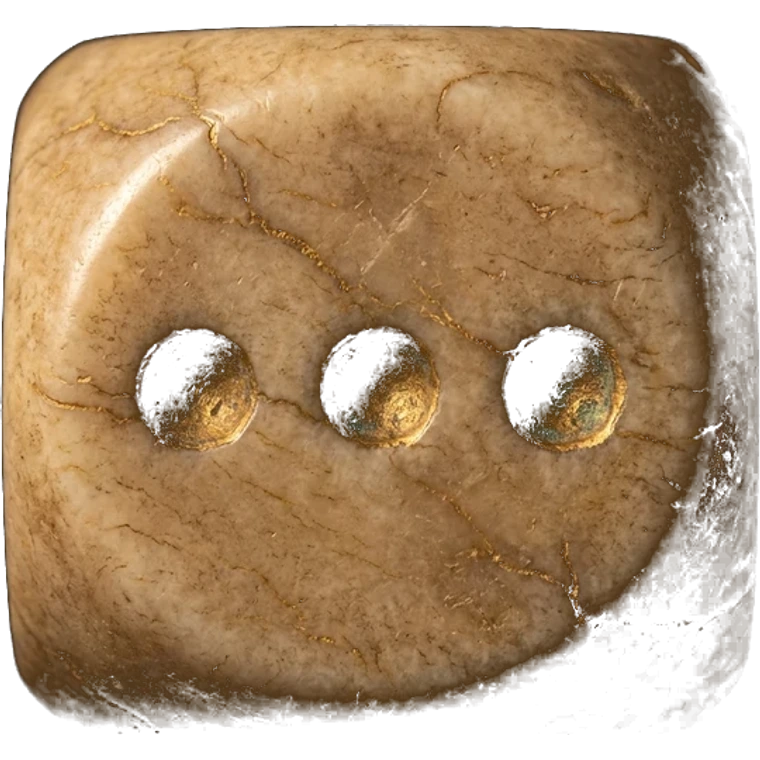
One cast a day. The oracle it gives stays with you until nightfall, and the bones return to your hand tomorrow.
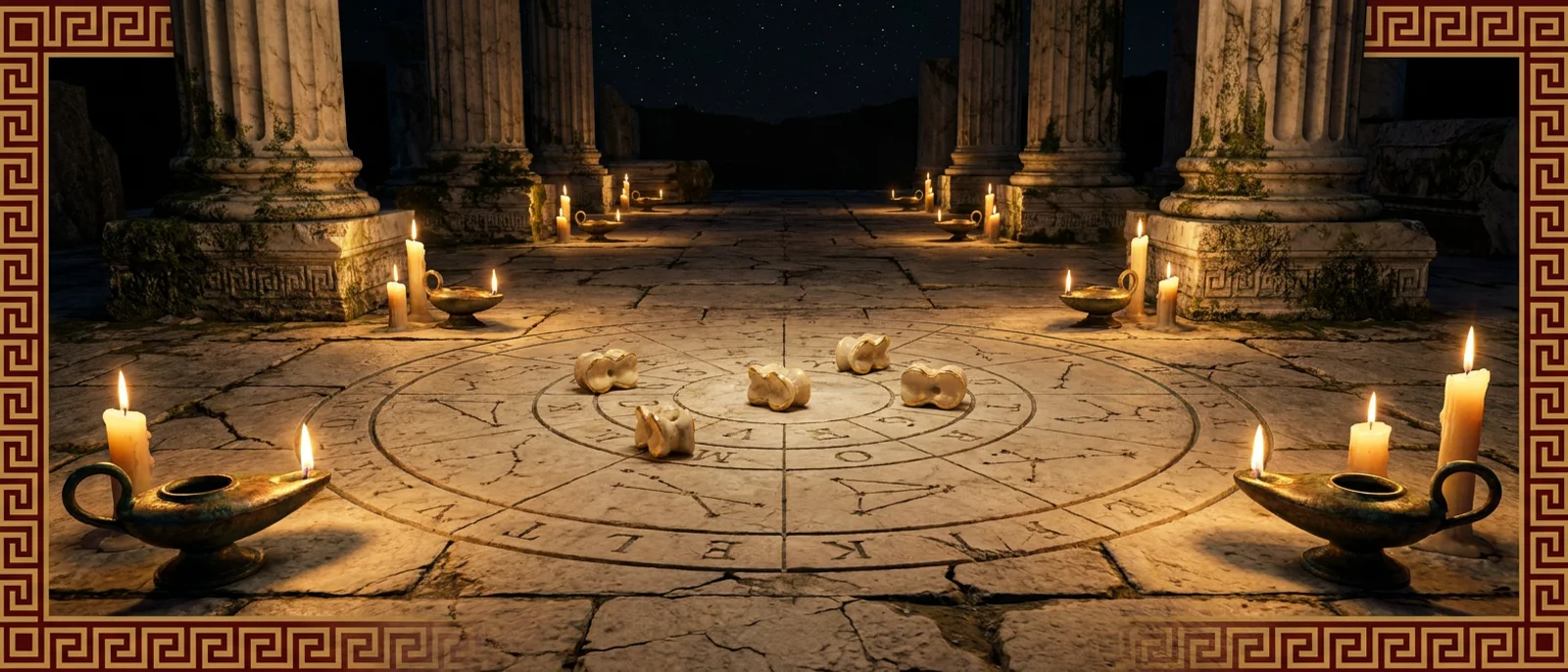
Anatolia
What is this oracle?
An astragalus is the heel bone of a sheep or a goat. It sits easily in the palm, it has four distinct sides, and when you drop it, it clearly lands on one of them. The ancients gave each of those four faces a value: one, three, four and six. Cast five of them at once, and the number that appears opened a door onto something far larger than a game. The Greeks called it astragalomancy, divination by the bones.
Anatolia kept the finest traces of it. At Termessos, in the mountain sanctuaries of Pisidia and Lycia, the rules of this oracle were carved straight into the rock. Every possible cast was named after a god, and beneath each name ran a line of prophecy belonging to that throw. There were fifty-six combinations in all, because five bones with four faces can resolve into no more than that. The one who carried a question would make the cast, find the matching number on the wall, and read what the god was telling them that day.
The oracle was never a crystal ball, it was a compass.
Not all throws weighed the same. The highest result belonged to Aphrodite and was known as the saving throw, a sign that things were turning in your favor. The lowest was called the Dog throw, a warning that meant slow down, wait, the time has not yet come. Between those two extremes lived dozens of throws that carried the real texture of a life: be patient, take heart, ask for help, do not give up, or sometimes simply stop and listen.
Here is the striking part. People did not cast these bones to learn the future. They never asked the stone what tomorrow would bring. Their question was always about the present: what should I do now? Should I set out, or wait? Speak, or stay silent? It showed you a direction, and you still took the step yourself. That is exactly why, after all these centuries, it can still speak to us.
The Knucklebone Oracle
The four faces of the bone
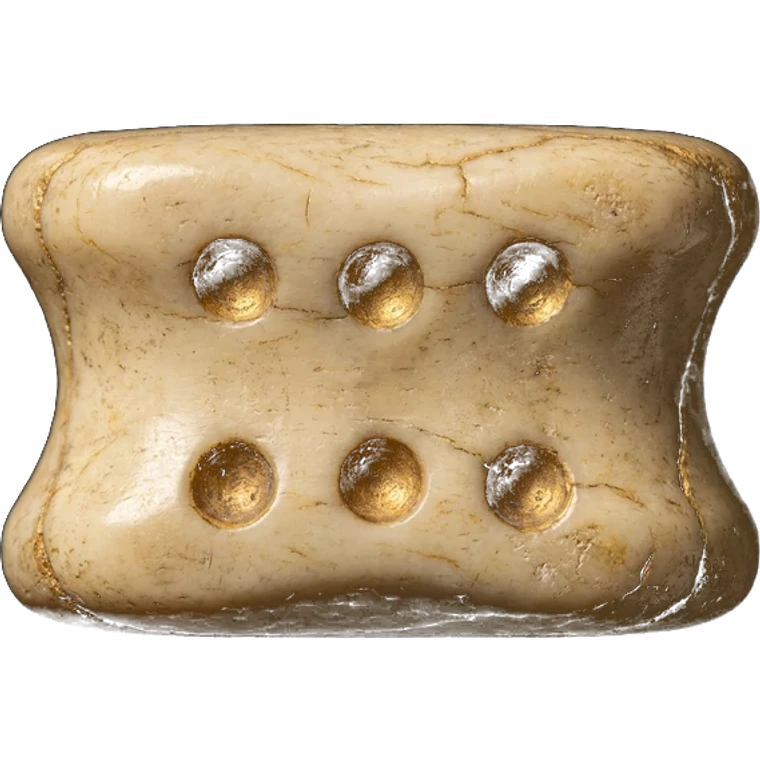
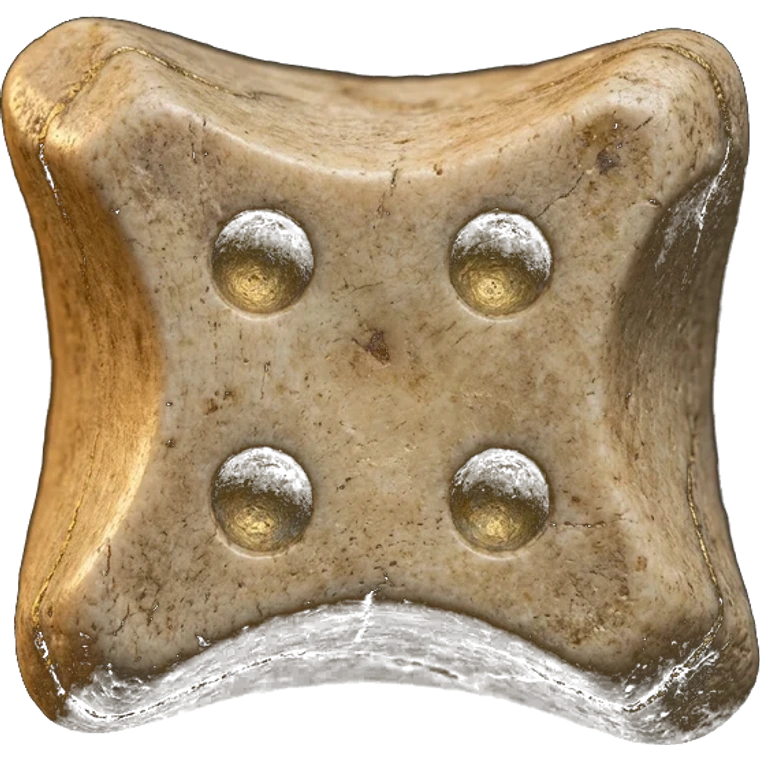
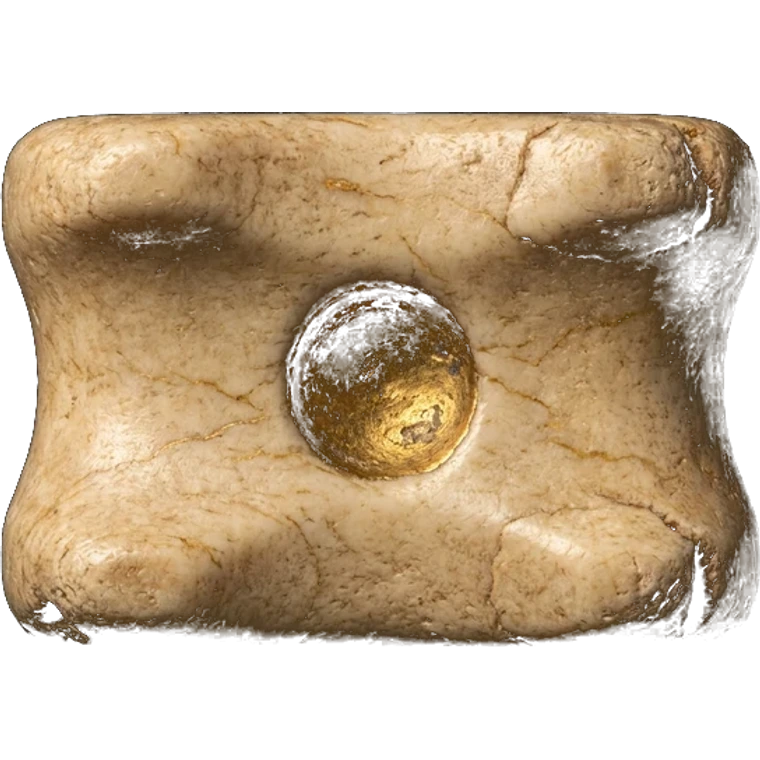
A knucklebone is not symmetrical like a die. Its four valued faces each have their own shape, and each one carried a name in the ancient world.
Narrow, rounded face. The highest value, grace and opening.
Broad concave face. Earth and steadiness.
Broad convex face. Flow and movement.
Narrow, concave face. The lowest value, caution and waiting.
A House of Zij ritual
How to read your cast?
When you cast the bones, two things come to you: the god who governs the throw, and the line of prophecy tied to that god. The god gives you the mood of the cast, and the verse turns that mood toward today. Read the number first, then the name, and leave the line for last. Do not rush it, because these words tend to speak in turns. A sentence that feels unclear at first often finds its meaning as the day unfolds.
Remember that this line is not giving you an order, it is offering you an angle. Reading it as "Aphrodite appeared, so everything will be fine" is as mistaken as panicking at "the Dog throw came up." The better question is this: how does this cast reflect the situation I am standing in right now? The moment you bring the answer close to your own life, the oracle has done its work. The rest, as always, is in your hands.
This oracle is a guide, not a verdict. The stars, and those old words cut into stone, show a leaning. They compel nothing. Your cast carries a whisper about today, yet the final word always belongs to your own intuition and reason.
Cosmic Games
The bones of Termessos are only one door. The Council’s other games are waiting.
Back to all games